PNN
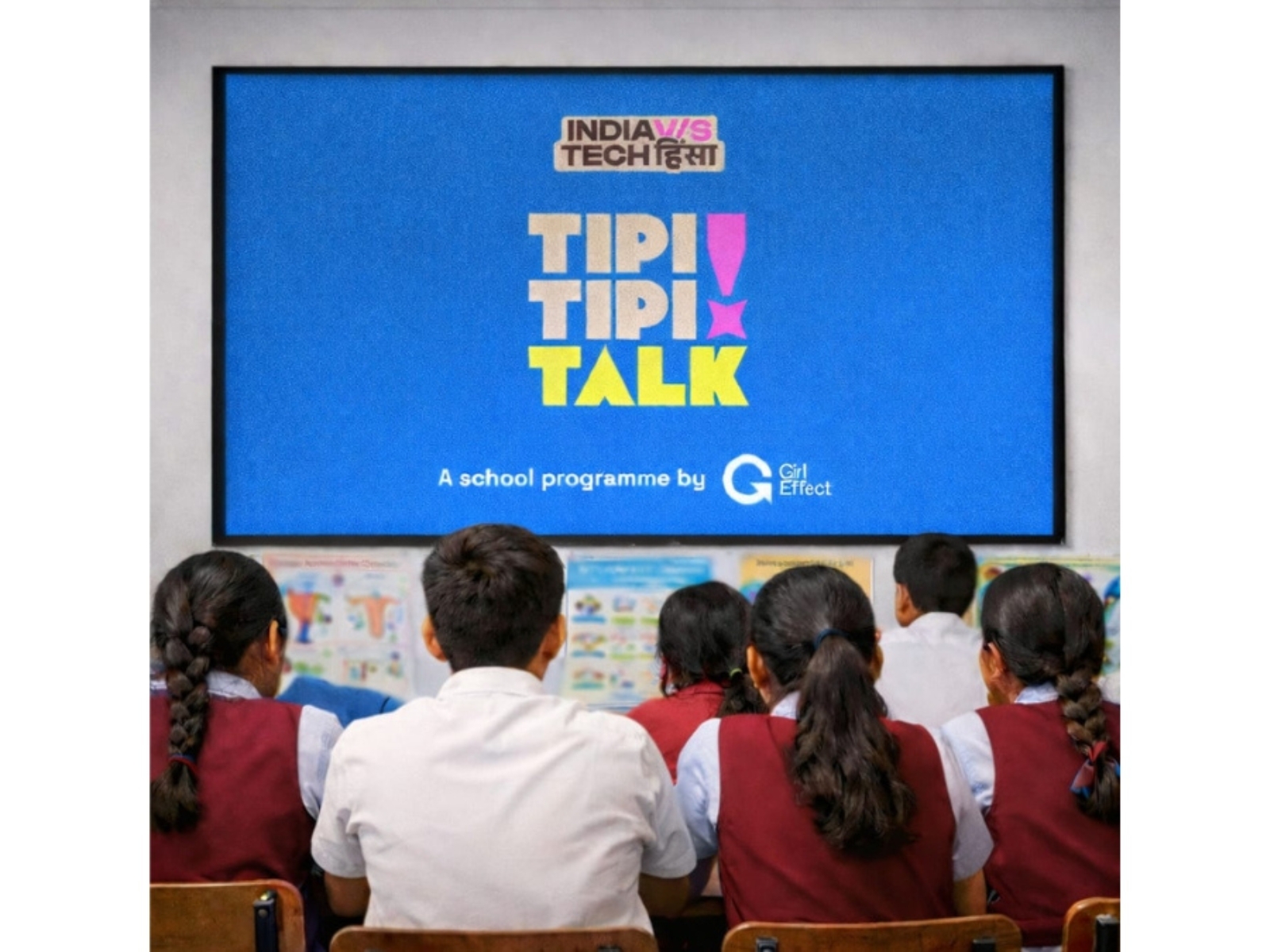
New Delhi [India], February 10: Safer Internet Day 2026 -- On the occasion of Safer Internet Day, Girl Effect India announced the launch of Tipi Tipi Talk, an interactive school-based programme that helps young people talk about issues that concern them, build confidence, and spark open conversations on various topics, including navigating the online world safely and respectfully. The first "Talk" is called the "TechHinsa Talk" that is part of Girl Effect India's broader India vs Tech Hinsa campaign, which takes head-on the growing challenge of technology-facilitated gender-based violence (TFGBV).
Delivered through structured workshops at school, the programme also creates safe spaces for peer learning. It establishes Digital Safety Clubs and trains students as Digital Safety Ambassadors to lead conversations and promote safer online practices within their schools. In its current rollout, the initiative will be implemented in Delhi across 45 schools, reaching 45,000 students, establishing 45 Digital Safety Clubs, and training 225 Digital Safety Ambassadors.
Speaking about the initiative, Kavita Ayyagari, Country Director, Girl Effect India, said, "Today's generation is growing up online, and the internet can become a dark place if young people are not taught how to safeguard themselves. With growing instances of online harm against girls, we need to teach them how to be safe. For boys, we need them to be empathetic friends and be responsible. For girls especially, internet safety matters more because it is tied to freedom -- freedom to learn, to speak, to create, and to belong. As digital use continues to grow, understanding and acting on online risks isn't optional -- it's essential. Tipi Tipi Talk is an initiative to help boys and girls talk about TechHinsa and learn to navigate digital spaces safely and responsibly."
Digital platforms are now an integral part of young people's lives -- but so are the risks. Globally, one-third of all internet users are children, and in India alone, an estimated 15% of active internet users are between the ages of 5 and 11. As children and adolescents come online earlier and in greater numbers, exposure to technology-facilitated harm has risen sharply. Data from the National Crime Records Bureau show that reported cybercrimes against women increased from 8,379 cases in 2019 to 14,409 in 2022, marking a 71% rise over four years. The increase has been even more pronounced for children: cybercrime cases reported against minors rose from 305 in 2019 to 1,823 in 2022, representing a 497% increase in the same period. These harms are not just statistics; they shape young lives. "The more I scroll, the more I see judgment, rumours, and pressure -- and it gets hard to separate real connection from hurt," says Tanya (name changed), a 17-year-old student and social media user. "Girls are expected to be careful, but we're not taught how to protect ourselves online."
Tipi Tipi Talk is an interactive school-based programme for students in Classes 8-12 that brings digital safety conversations into classrooms in engaging and relatable ways and teaches young girls and boys how to be safe online. Through animated films, real-life scenarios, and guided discussions, it simplifies complex topics such as online safety, technology-facilitated harm, consent, privacy, and respectful behaviour into practical, age-appropriate lessons students can apply to their everyday digital lives. Tailored separately for Classes 8-10 and 11-12, the curriculum also includes easy discussion guides for parents and teachers and will be rolled out with local partners in Delhi and Mumbai and expanded to other cities in India, engaging students alongside their teachers and their parents.
Tipi Tipi Talk expands Girl Effect India's ongoing work to address technology-facilitated gender-based violence, building on the India Vs TechHinsa campaign and bringing prevention and digital safety directly into schools.
About Girl Effect India
Girl Effect is an innovative, global non-profit organization dedicated to unlocking the potential of adolescent girls and young women across Africa and Asia. We are working with and for girls to break down the barriers they face, enabling them to unleash their full potential. Our compelling content, trusted programs, and connections to vital services drive measurable health, education, and livelihood outcomes. We improve health, education, and economic opportunities by connecting them to life-changing information, digital tools, and trusted support. Whether it's helping girls stay in school, access vaccines, make informed choices for health, or engage with safe, relevant media and technology, our mission is to empower them to thrive and redefine what's possible. Through locally rooted media brands, two-way digital platforms, chatbots, dramas, and peer networks, Girl Effect creates safe and resonant spaces for girls to gain confidence, knowledge, and agency. In the past year alone, we reached more than 108 million individuals across Africa and Asia, including 78.5 million in India. CTRL+SHIFT+RESPECT is a programme to raise awareness about TFGBV, supported by the Kering Foundation and implemented by Girl Effect India.
Join India Vs TechHinsa Campaign on Chhaa Jaa: https://www.instagram.com/reel/DRzTKCNjOfd/
(ADVERTORIAL DISCLAIMER: The above press release has been provided by PNN. ANI will not be responsible in any way for the content of the same.)