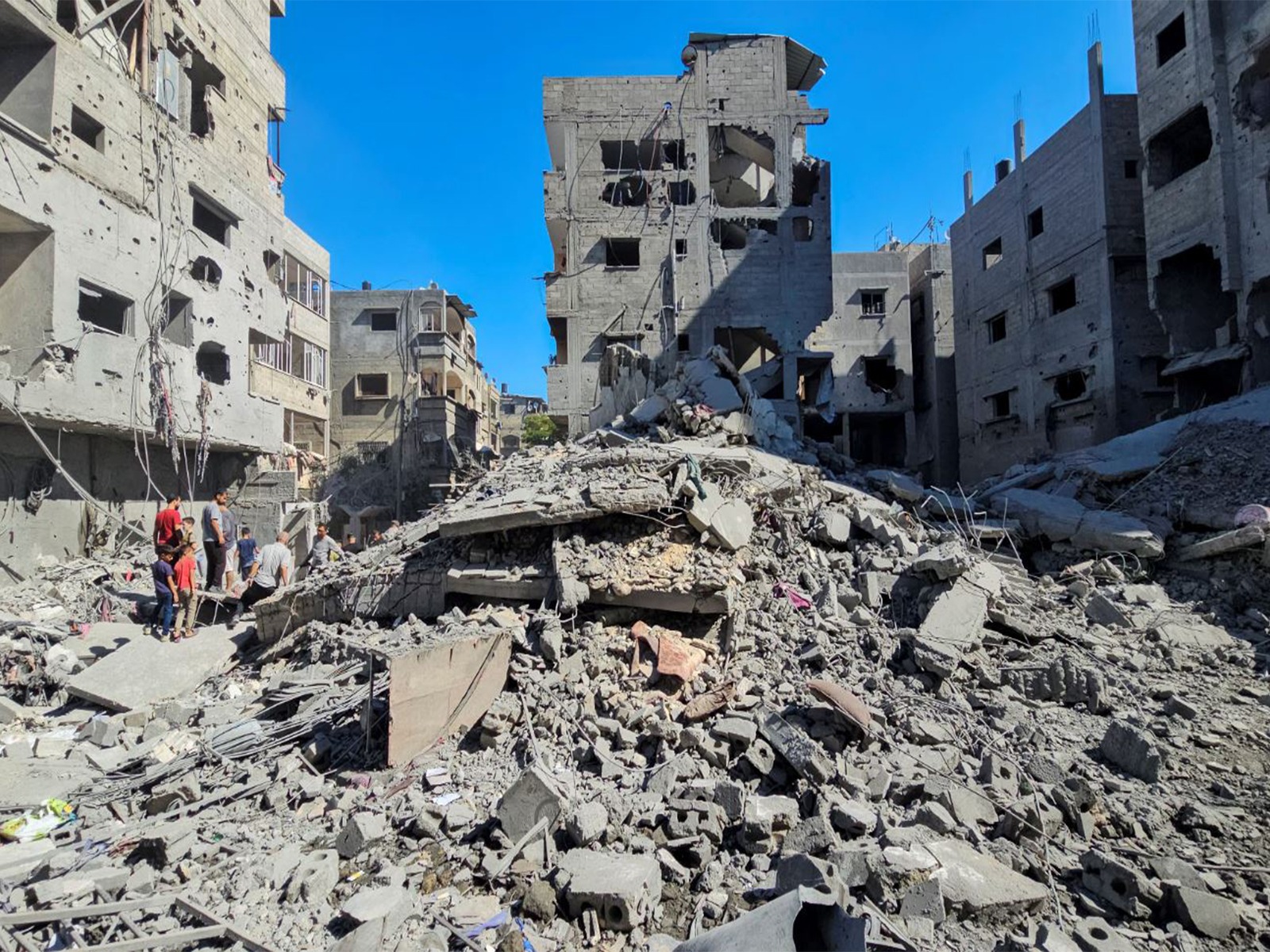
Tel Aviv [Israel], December 3: On October 10, 2025, a ceasefire was supposed to have put an end to Israel's genocidal war on Gaza. But two months on, Israel has violated the ceasefire more than 500 times, killing at least 356 Palestinians, and sending the total death toll in Gaza above 70,000.
Israel's Prime Minister Benjamin Netanyahu has made his position clear, saying that the war "has not ended".
Analysts say that while the rate of Israel's killing of Palestinians in Gaza has slowed since the ceasefire, the war, for all intents and purposes, has continued.
"If you break genocide down to its essence, it's not only mass killing," Muhammad Shehada, a visiting fellow with the Middle East and North Africa programme at the European Council on Foreign Relations, told Al Jazeera.
"It is also destroying the population's ability to exist together as a group, and that is being achieved by the mass destruction [of infrastructure], the killing, ethnic cleansing, and starvation," he said.
Analysts say that instead of coming as a reprieve for Palestinians, the ceasefire gave the international community an excuse to stop focusing on Israel's actions in Gaza. The US-backed ceasefire agreement was meant to stop Israeli attacks on Gaza and kick-start aid deliveries to Palestinians in the besieged Gaza Strip, where famine had been declared.
"At long last, we have peace in the Middle East," US President Donald Trump declared from Egypt's Sharm el-Sheikh, where a Gaza peace summit was being held. But Israel continued attacking. It has also failed to allow the entry of the amount of aid it agreed to, destroyed more than 1,500 buildings, and expanded deeper into Gaza, cutting people off from their homes.
"It's theatre because everyone was fed up with the genocide and keen for it to disappear and not solve it. And that's exactly what we've seen," Shehada said. "The main difference, of course, is the reduced media coverage, which was one of the intended purposes of the so-called ceasefire," Lebanese Palestinian researcher and writer Elia Ayoub told Al Jazeera.
"There is far less pressure on Israel today than there was until October 10, with no sign of accountability on the horizon."
Source: Qatar Tribune