Russian Creative Week — Eurasia Proposes International Framework for Creative Economy Development
VMPL
New Delhi [India], November 7: Nine initiatives emerged from Russian Creative Week — Eurasia, including proposals to establish a Eurasian Creative Industries Alliance, a university dedicated to the creative economy, and an industrial cluster for artists and sculptors. The international festival-forum took place on November 2–4 in Ufa, Russia.
Over three days, the forum's business and festival programmes attracted more than 23,000 participants. More than 150 Russian and international experts took part, representing 14 countries, including Kazakhstan, Uzbekistan, Armenia, Türkiye, the UAE, China, Belarus, Abkhazia, India, Kyrgyzstan, Iran, Brazil and Egypt.
For the first time, the forum was held in an international Eurasian format. Participants discussed joint production and export of creative products, investment opportunities, intellectual property protection and professional training.
Ufa as a Hub for Eurasian Cooperation
One of the key proposals was to establish the headquarters of the Eurasian creative economy in Ufa. The initiative envisages a permanent platform with a project office based at the Eurasian World-Class Research and Education Centre, where representatives from different countries could identify partners and develop mechanisms for implementing joint projects.
Radiy Khabirov, Head of the Republic of Bashkortostan, supported the proposal to position the region as one of the centres of Eurasian cooperation.
"We have always wanted to position ourselves as the heart of Eurasia, a unique meeting point of European and Asian cultures. Here, you can stand with one foot in Europe and the other in Asia," Khabirov said.
The Eurasian Museum of Nomadic Civilisations, which the republic plans to complete within the next two years, could become another venue for international cooperation.
Khabirov also proposed working with the Russian Ministry of Foreign Affairs to organise a dedicated meeting on creative industries among Shanghai Cooperation Organisation (SCO) member states during the SCO summit in Ufa in 2028.
To establish systematic cooperation with international partners, participants supported further development of the proposal to create a Eurasian Creative Industries Alliance.
The alliance would bring together professional communities and development institutions to facilitate joint production, exports, investment and the commercialisation of intellectual property.
A declaration on cooperation among Eurasian countries in the creative economy was identified as one possible founding document.
Nathan Brown, Strategic Adviser to the President of the International BRICS Alliance, identified access to capital as one of the industry's main challenges. He suggested considering sovereign wealth funds as a source of financing for large-scale projects and establishing a permanent international institution to connect professional communities.
Alexander Zhuravsky, Deputy Head of the Presidential Directorate for Social Projects of the Russian Federation, emphasised that the alliance initiative originated within the creative industries themselves and reflected businesses' demand for shared rules and mechanisms of cooperation that take into account differences in national legislation and market conditions.
Education and Production Infrastructure
Another proposal was to establish a Eurasian University of Creative Economy in Bashkortostan, based at the Eurasian World-Class Research and Education Centre.
The university would train professionals not only to create creative products but also to manage their production and promotion.
Proposed areas of study include territorial development, intellectual property management, exports, creative entrepreneurship and international producing. Particular attention would be given to training managers responsible for creative economy development at national and regional levels.
Another practical initiative involves establishing an industrial cluster for the art industry in Bashkortostan — the first specialised production facility of its kind in Russia.
Sculptor Dashi Namdakov raised the issue of insufficient domestic manufacturing capacity, which often forces Russian artists and sculptors to commission the production of their works abroad.
The proposed cluster would provide creators with access to manufacturing technologies and expertise while also attracting international orders.
New Markets for Creative Businesses
The international potential of Bashkortostan's creative products was highlighted in a study conducted by the Unified Centre for Creative Economy.
Researchers analysed approximately 2,240 sources and 11,000 comments and reviews, and interviewed experts from Kazakhstan, Kyrgyzstan, Türkiye and Belarus.
Mobile games developed by four studios from the republic had accumulated at least 3.45 million downloads, while the animated film Ni Pukha, Ni Pera had received approximately 9.5 million views.
Independent content about the region had attracted around 2.2 million views, while interviewees in all four countries recognised Homay, a song by the Bashkortostan-based group AY YOLA.
However, the success of individual creative products has not yet translated into equally strong international recognition of Bashkortostan itself.
To promote creative products abroad, participants developed the Made in Bashkortostan — for Eurasia initiative.
The programme would bring together promising regional brands and provide export support tailored to the languages of partner countries, including product adaptation for new markets, intellectual property protection, distributor identification and participation in international exhibitions and festivals.
The study also recommended introducing consistent regional branding and maintaining ongoing support for international business relationships.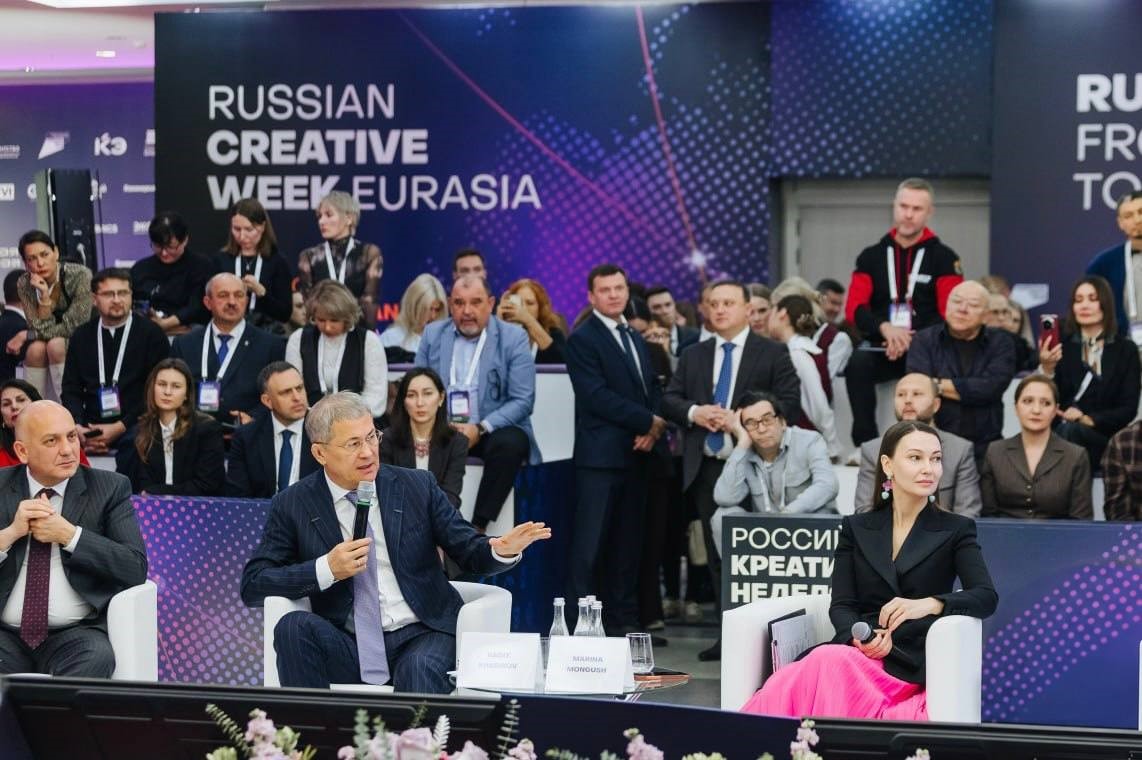
Her Excellency Farida Abdulla Kambar Al Awadhi, founder of Cinmar Design (UAE), proposed establishing an international platform for designers and manufacturers across Eurasia.
The platform would enable participants to showcase their products to international audiences, exchange expertise and identify potential partners.
Anita Tsoy, People's Artist of Russia and Director of the Institute of Creative Industries at Don State Technical University, proposed a pilot programme for joint music projects involving Russia, CIS countries and Asia.
The programme would bring together performers, songwriters and producers to create new works and promote them in international markets with the support of local partners.
It would also involve advance agreements on copyright ownership and revenue sharing. Tsoy expressed her readiness to participate personally in the project and involve young musicians.
During the Made in Bashkortostan pitching session, six regional teams presented projects in film, design, music and video games.
The presentations generated proposals to organise screenings of Bashkortostan-produced films in Istanbul and showcase products from a local craft workshop at the Unique Russia exhibition in Moscow.
Another initiative involves continued cooperation with the Russian Centre for Intellectual Property (RCIP) to develop mechanisms for joint intellectual property ownership, licensing, international distribution and the commercialisation of rights.
Irina Yakovleva, Deputy Chair of RCIP, stressed the importance of determining ownership rights to existing and newly created works, revenue-sharing arrangements and applicable jurisdictions before launching international projects.
Potential instruments include a Eurasian trademark, digital registration of intellectual property rights and the use of intellectual property as collateral.
Russian Houses abroad could provide additional infrastructure for international cooperation.
Participants proposed developing Rossotrudnichestvo's international offices into modern spaces for entrepreneurs, designers, young creators and international teams.
According to Alexey Kleshchev, Deputy Head of Rossotrudnichestvo, these centres could introduce international audiences to Russia's modern industries and help establish business relationships with local partners.
The Next Generation and Regional Economies
The Creative Generation — Eurasia initiative envisages cooperation between youth and educational programmes in Russia and CIS countries through project-based schools, internships, hackathons and collaborative work in digital environments.
Its objective is to enable young entrepreneurs and creators to establish international teams while still studying.
Another proposal involves developing a pilot model of "return tourism" in Bashkortostan, combining gastronomy, events, urban environments and local brands into tourism experiences designed to encourage repeat visits.
The potential of local businesses was also showcased through the festival programme, including a fashion show featuring Bashkortostan-based brands and the Zur-Bazar marketplace, which brought together local producers, artisans and creative entrepreneurs.
The Creative Economy Beyond Individual Industries
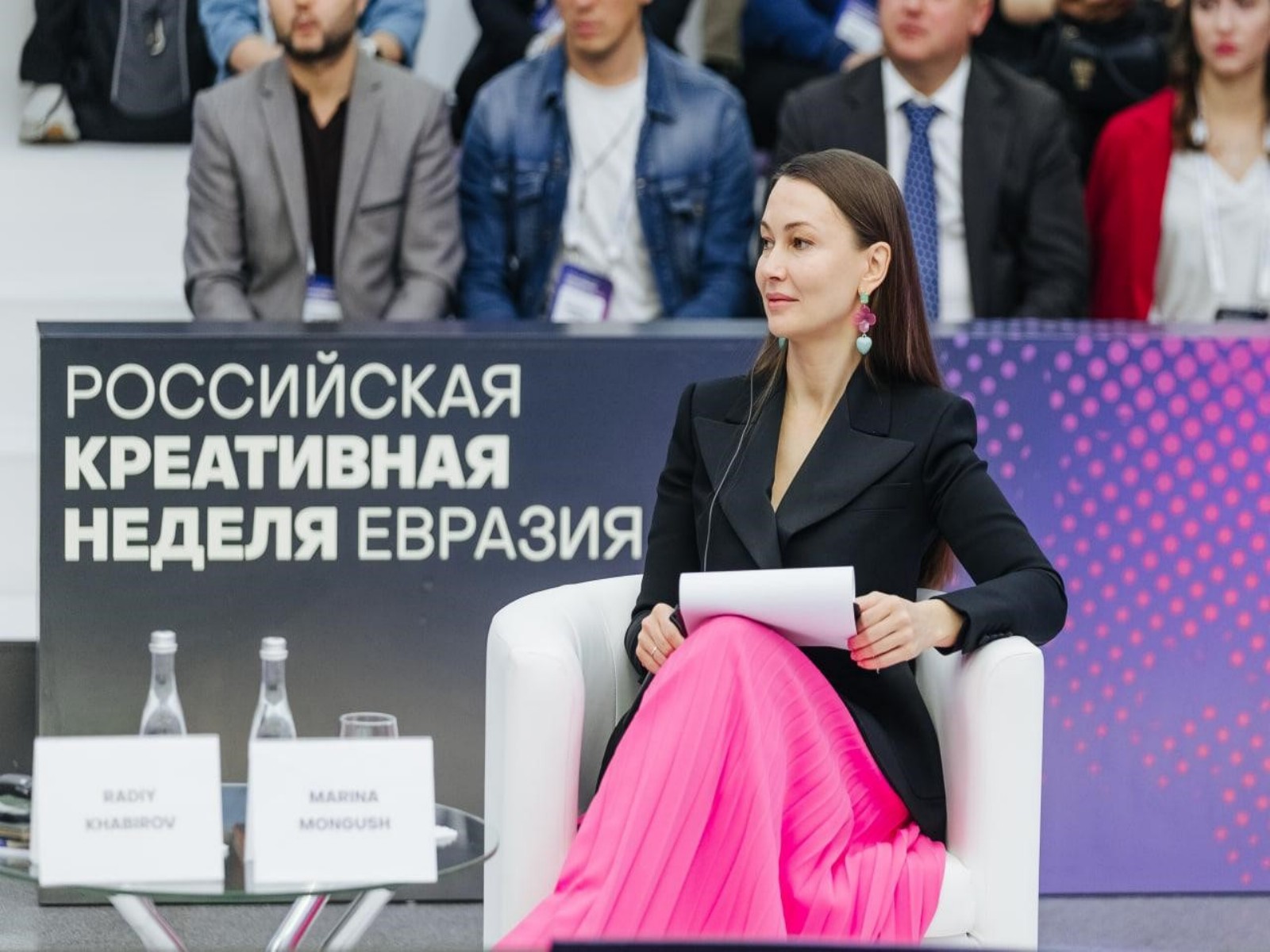
Marina Mongush, President of the Unified Centre for Creative Economy, noted that Russia had developed its own system for supporting creative industries over the past six years, including dedicated legislation, the formal recognition of 16 creative industry sectors and the establishment of support institutions.
According to Mongush, the development of creative industries should be assessed not only through financial indicators but also through their impact on society and regional development.
She identified seven interconnected dimensions of the creative economy: industry, political, social, spatial, human capital, governance and research.
International cooperation plays a particularly important role within this framework.
"In Russia, the creative economy is, above all, decentralised. We emphasise that it is not concentrated solely in major cities. For us, it is important to develop the creative economy in smaller towns and rural communities," Mongush stressed.
To implement the nine initiatives, the Government of the Republic of Bashkortostan and the Unified Centre for Creative Economy are establishing a working group.
The group will focus on further developing the proposed projects, identifying partners and funding sources, and determining implementation mechanisms.
Vadim Titov, Head of the Presidential Directorate for Strategic Partnership and Cooperation of the Russian Federation and Co-Chair of the forum's Organising Committee, noted that the event's international format laid the foundation for long-term cooperation between countries and stronger relationships that could contribute to improving people's quality of life.
Russian Creative Week — Eurasia is organised by the Unified Centre for Creative Economy (ANO Creative Economy) and the Government of the Republic of Bashkortostan.
(ADVERTORIAL DISCLAIMER: The above press release has been provided by VMPL. ANI will not be responsible in any way for the content of the same.)